


.jpg)

Share this article:
.svg)
.svg)

Why subscription apps shouldn’t overlook Android users
By: Ashley Black, Candid Consulting
There’s no denying that iOS users are more valuable than Android users. iOS has a better trial to subscription conversion, higher ARPU, and stronger retention.
BUT, iOS users also cost a lot more to acquire (nearly 3x as much)!
And while Android users may not yield the highest LTV, they still represent a significant portion of the US-population (~45%). So for apps that are looking for new ways to grow revenue, Android users are a massive audience.
You just have to think about Android a little differently…

Save your fancy videos and costly creatives for Instagram Reels, you’re optimizing for Search and Play traffic now.
Want to get in front of the highest intent audience on a platform that isn’t available on any other network? Look no further than Google’s app campaigns. There’s just no denying that when it comes to acquiring Android users, Google’s app campaigns (fka UAC) are going to take the cake.
Google has two massive advantages over any other network when it comes to Android.
- Google owns Android which allows it access to more data vs. other networks
- Play Store traffic is exclusively available on Google, which reaches the highest intent users at exactly the right time.
These two reasons alone are why Google should be your first stop when acquiring Android users.
You may be asking, “What about all my videos that work so well on Meta?”.
You can certainly use them with Google - which includes video traffic on YouTube and AdMob - but don’t expect them to get as much traffic as they do on Meta. If you’re focused on deeper funnel events, you’ll likely see more of your spend going to “Search” which includes traffic on Google.com as well as traffic from searches in the Play store. These placements mostly utilize text assets, so it’s best to fine-tune your copywriting skills and create creative themes to test.

Where a lot of apps go wrong is copying and pasting their iOS subscription strategy onto Android. Broadly speaking, Android users tend to be more price-sensitive and likely to churn vs. iOS users.
With that in mind, consider the following:
Have you allowed enough time to demonstrate your app's value before pushing the subscription?
iOS users may be OK paying just to try an app out. Android users want to know the app is going to work for them before paying. Think through your trial duration and what features you put behind the paywall that allow the user to fully understand why they should be paying.
Have you tested different pricing structures/paywalls?
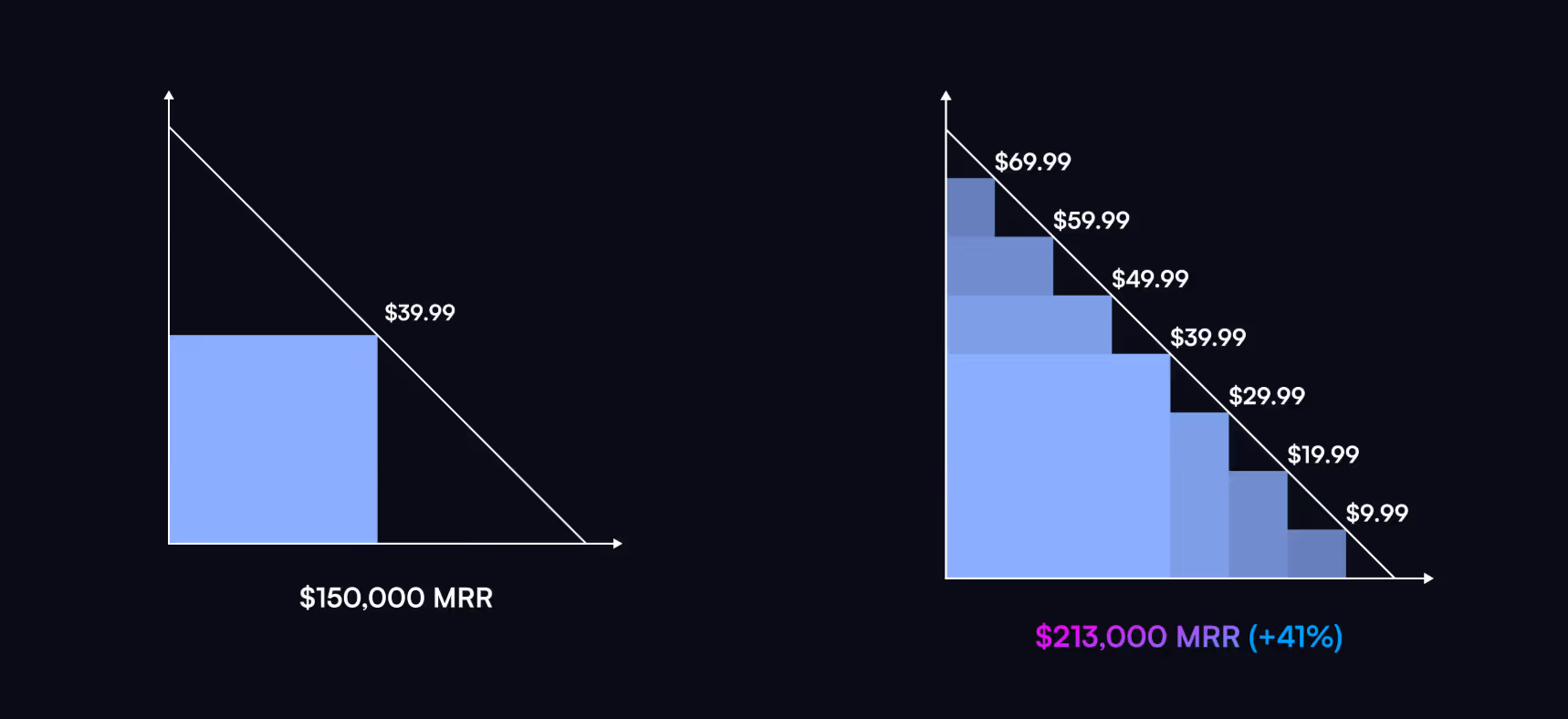
Android users may respond differently to discounts, promotions, and pricing. Limited time offers, BOGO, and precision pricing are all tactics that might convert better with Android. And remember, just because it didn’t work on iOS doesn’t mean it won’t on Android.
Note: In this context, precision pricing is the idea of using small, seemingly precise price endings (e.g., .97, .99, .95) to create the perception of a discount, deal, or careful optimization without materially changing the economic price.
Is the subscription-only model the best fit?
While not a fit for every app, ads can be a great way to monetize Android users where the subscription value is lower, or who would not otherwise pay for the app. IAPs are another consideration, especially if they allow access to a bite-sized portion of your app at a fraction of the cost. Over time, those purchases can accumulate to make those users more valuable.
Author’s note: these methods can be hard to get right; be sure you understand app usage and user behavior.

One of the underrated benefits of Android is how clean measurement still is. No ATT. No SKAN. No endless modeling you don’t know if you can trust.
The time saved on reporting alone makes Android worth it. Not to mention the ability to tie a specific ad to a specific conversion, on a specific day, with a real or predicted value. What a dream!
On Android, you can get so much more granular with your targeting and go deeper with conversion events without concern for loss of data. No need to worry about NULL values or post-back windows.
Sure, you’re still going to run into discrepancies between sources, but it’s nothing like navigating Apple’s maze of attribution.
You’ve made your point. Now what?
Assuming I’ve done a fairly good job convincing you to invest more time (and money) on Android and your Android app is in a good enough place to acquire users, here’s where to focus next:

Reminder: Google Ads performs so well on Android because of Play Store traffic.
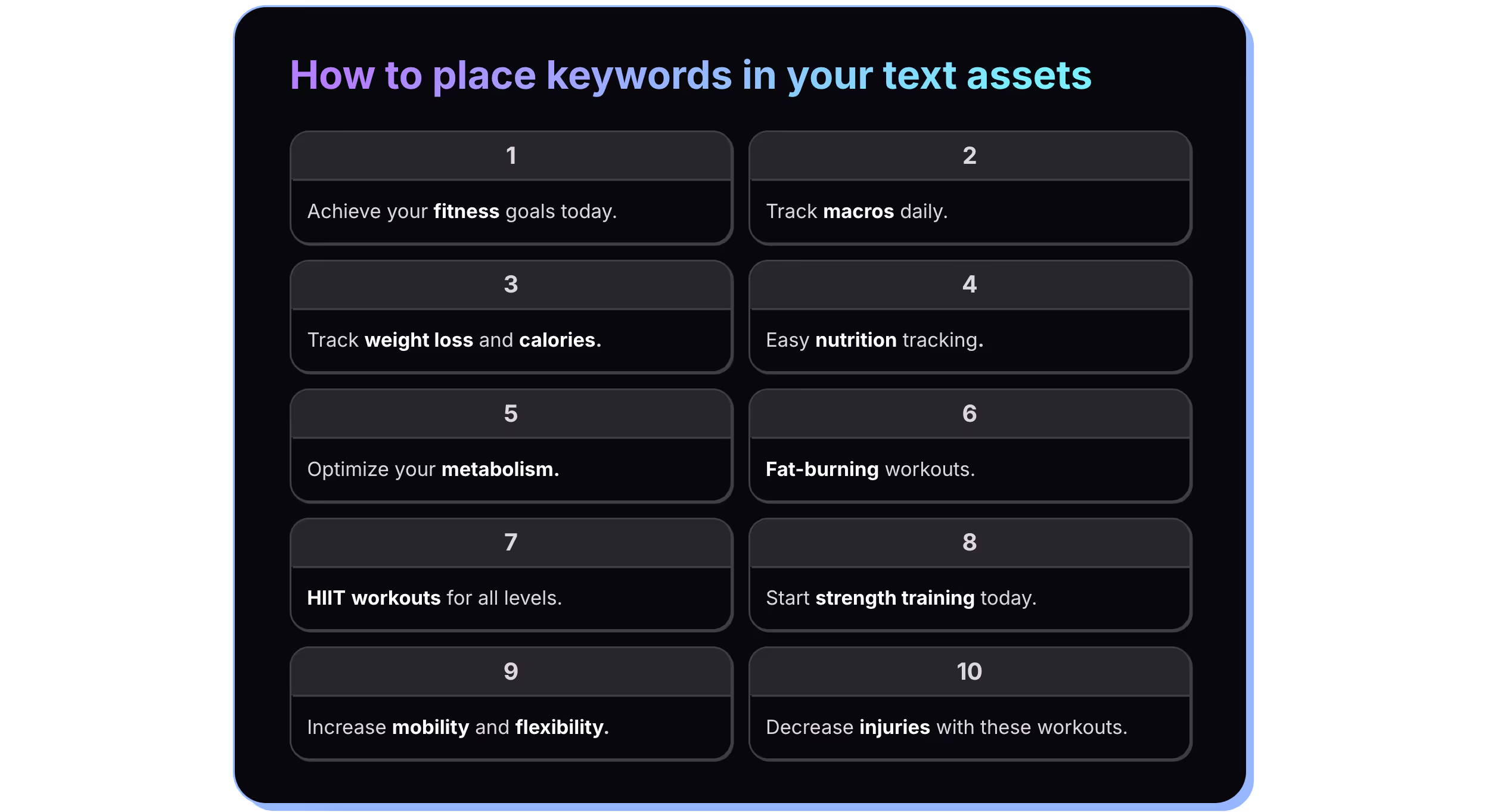
Ads in the Play Store are typically a combo of your app icon, app name, and…a snippet of text! It’s imperative you include lots of key terms in your text assets to ensure your message resonates with every potential user.
You should be exhaustive with your text assets. While Google App Campaigns doesn’t operate like search ads (where you bid on keywords), it does index text assets for better placement in user searches.
Here’s how I’d create various text assets using a fitness app example. The bolded words are meant to show you how to place certain keywords in your text assets so they have the opportunity to match user searches.

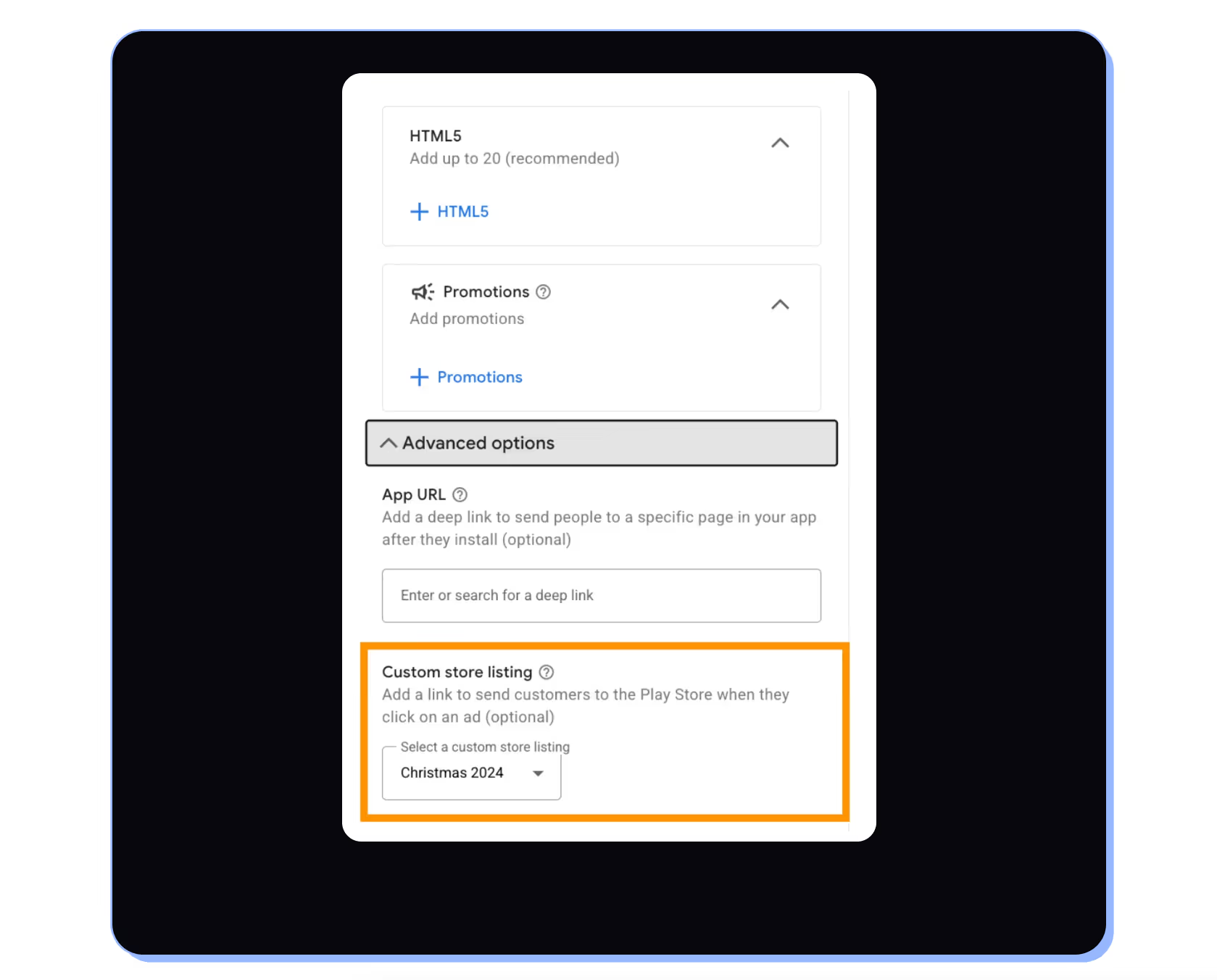
Just like with Custom Product Pages on Apple, you can create custom “landing page” experiences for users based on their Play Store searches, geography or your Google ads.
For example, if you have a Fitness app that has nutrition features, you can create a separate store listing in Play to drive users who search for “nutrition app”, “weight loss tracker”, “macro-tracking” etc.
Additionally, if you have specific ad content around a feature in your app, you can run your Google Ads to that specific CSL. This is set up when editing an Ad Group’s assets under “Advanced Options”.

Yes, Google allows ROAS bidding for iOS campaigns, but with all the measurement complexity, it can be a challenge (and that’s a huge understatement).
However, ROAS bidding for Android - now that’s worth trying. I’ve written about that extensively already, so be sure to check out this guide for more details.

Expanding to Android can be a powerful unlock for teams looking to scale revenue and audience reach with clearer measurement and more predictable returns. The shift from iOS to Android may take time, but is not to be overlooked and underestimated.
Want more of Ashley?
Go read her blog post on How Subscription Apps Can Use Value-Based Bidding in Google Ads here.
Go listen to her on the Price Power Podcast here.
.avif)
Reach out at ashley@candidconsultinggroup.com
Follow her on LinkedIn

.svg)
.avif)


.avif)
.avif)


