Xavier de Baillenx is CEO and co-founder of Ramdam, which produces creator ads for Tinder, PhotoRoom, Flo and other category leaders. Before that he spent five years at Match Group, after his own dating app was acquired. Ramdam now delivers over 10,000 creatives per month, which gives Xavier an unusual vantage point on what actually works in performance UGC. He joins the Price Power Podcast to talk through how subscription apps can scale UGC on TikTok and Meta without turning their internal team into a content factory.
Ten Tips from the Episode
1. Volume beats perfection in creator selection

The instinct is to find creators who perfectly match your target persona. Xavier argues this is backwards.
Winning clients embrace breadth. They test 50 different creators who roughly fit the profile rather than 5 who match exactly. The reason is simple: nobody can predict which ad will work. Even Xavier, after thousands of campaigns, admits he has no clue which creative will succeed when he sees it.
The pattern he observes in successful apps is a willingness to experiment. Different formats, different creators, different angles. The data tells you what works. Your intuition usually doesn't.
2. Expect a 5% success rate, and structure around it
Most ads won't perform. This is normal.
Xavier puts the success rate at around 5%. The math is uncomfortable but clear: to find winners, you need to test at scale. Top spenders produce 1,000+ creatives per month. Even at five or six figures of spend, you need 20-50 new creatives monthly just to stay ahead of fatigue.
This reframes the UGC problem. It isn't about finding the one perfect ad. It's about building a system that generates enough attempts to surface winners reliably.
3. One story from ad to paywall
Winning apps keep one narrative consistent across every touchpoint.
If the ad promises "sleep better in 7 minutes," that exact language should appear on the store page, in onboarding, and on the paywall. Xavier sees conversion fall apart when there's narrative inconsistency, when the promise in the ad doesn't match what users encounter after downloading.
This also explains where UGC underperforms: products that need longer technical demos, like PDF utilities and certain games, or that can't deliver an emotional promise quickly. Those often scale better on Google with deeper funnel strategies.
4. Test one platform, one country first
When starting with UGC, focus is everything.
Xavier's recommendation for a serious test: pick TikTok or Meta, not both. Focus on one country, usually the US. Start with 20+ creators across 4-5 concepts, and spend $20-50K in the first month. Below that threshold, you won't generate enough signal to know whether the channel works for you.
Trying to do everything at once diffuses your learning. Get signal on one platform before expanding.
5. US English ads often work internationally
This surprised Xavier himself: winning US creatives frequently perform in non-English markets.
A top performer in US English can be a top performer in France or Germany, even without localization. It doesn't work as well as it does in the US, but it works. Xavier recommends testing both the original English version and local language versions with local creators or AI-generated localization.
The winning concept often transcends language. Don't assume you need to rebuild everything for each market.
6. Leave room for happy accidents early, then replicate
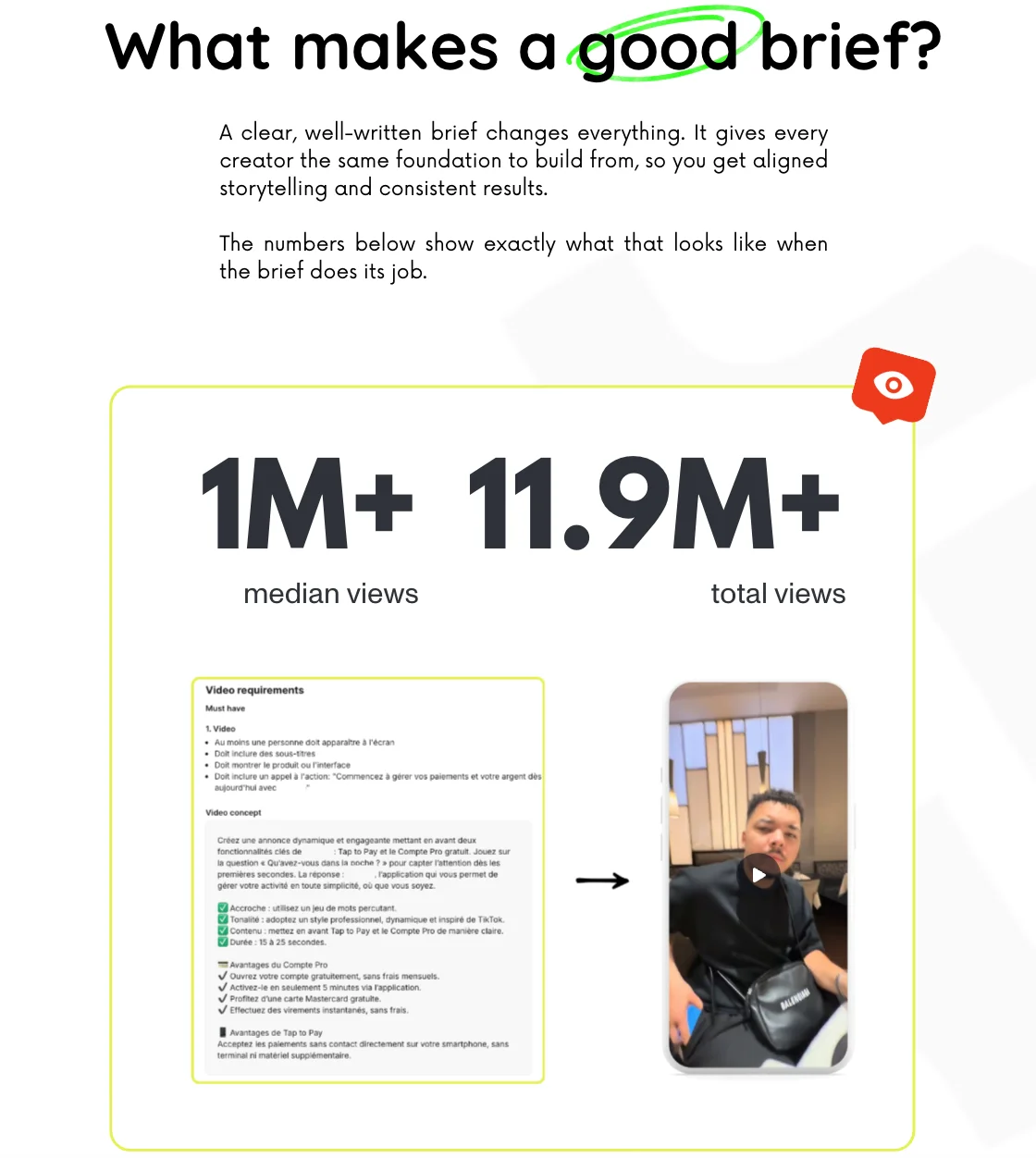
Early briefs should give creators space to interpret.
If you're too strict with the script, creators sound unnatural. If you're too loose, they get lazy. The sweet spot gives enough structure to guide the concept while leaving room for what Xavier calls "happy accidents," the unexpected moments of creativity that turn into winners.
Once you find a winning format, shift to replication. Same hook, same narrative structure, but new faces and fresh energy. Many of Ramdam's best-performing campaigns are replicate campaigns built on proven concepts.
7. Platform differences matter: TikTok vs Meta
TikTok and Meta reward different content styles.
| TikTok | Meta | |
|---|---|---|
| Length | Around 10 seconds | 15-30 seconds |
| What works | Trends with trending sounds, which can get massive reach even when the content looks simple | Structured narratives and product demos with a clear value proposition |
| CTA | Organic and low-pressure | Direct: show the product, reinforce the value |
| Underrated format | Carousels telling personal stories, especially for dating apps | Demos that make the promise concrete |
There's overlap, and some ads work on both. But optimizing for each platform separately produces better results.
8. Creator diversity directly impacts reach
Meta and TikTok algorithms treat ads with the same face as near-duplicates.
If you run 20 creatives but they all feature the same 2-3 creators, the platforms consider it almost the same ad, and it won't reach new audiences. This is why Ramdam assigns one creator per video across their 50K creator network.
Diverse faces mean diverse audiences. This isn't just about testing, it's about unlocking incremental reach at scale.
9. Structure test and scale campaigns separately
Most of Ramdam's clients use a two-tier campaign structure.
Test campaigns optimize for CPI. This gives fast feedback on which creatives are generating interest. Quick winners from test campaigns get promoted to scale campaigns, which measure what actually matters: subscription rate, ROAS, and downstream conversion.
This solves the feedback loop problem. CPI gives you signal in days. ROAS can take weeks. By separating the stages, you can iterate quickly while still optimizing for business outcomes.
10. AI video complements, it doesn't replace
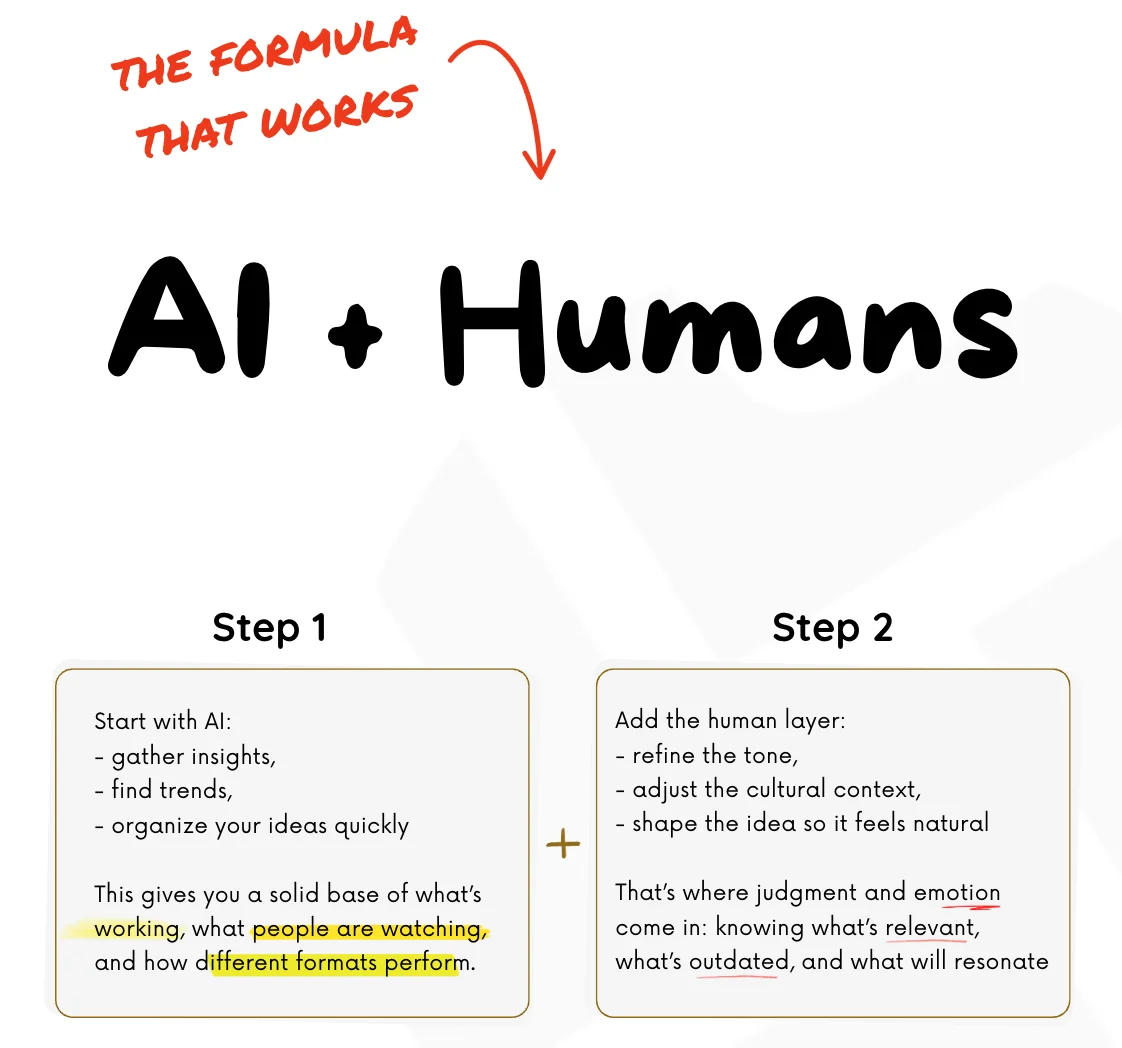
AI-generated creators are useful in specific situations: hard-to-source personas such as high-income demographics or pregnant women, complex scenes like street interviews and cinematic concepts, and scaling proven concepts across variations.
But AI can't produce happy accidents. Xavier's most successful ad ever came from a creator mispronouncing the brand name in a charming way. The team almost rejected it. It got 350 million views.
The playbook: find winning concepts with human creators, then scale variations with AI. Or test concepts quickly with AI, then bring in humans for execution. AI is a complement, not a replacement.
Key Takeaway
Scaling creator ads is a volume problem before it is a taste problem. You can't pick the winner in advance, so the job is building a system that produces enough diverse attempts to find one: many creators rather than a few perfect ones, a test tier that reads CPI fast and a scale tier that reads ROAS properly, and one consistent promise carried all the way from the ad to the paywall.
Resources
Ramdam: https://www.ramd.am/
Xavier de Baillenx LinkedIn: https://www.linkedin.com/in/xavier-de-baillenx/
Email Xavier: xavier@ramdam.io (mention the Botsi Podcast for a personalized demo)
Listen to the Full Episode
Youtube
Episode 10
Spotify
Apple Podcasts
Check out past episodes here: PricePowerPodcast.com