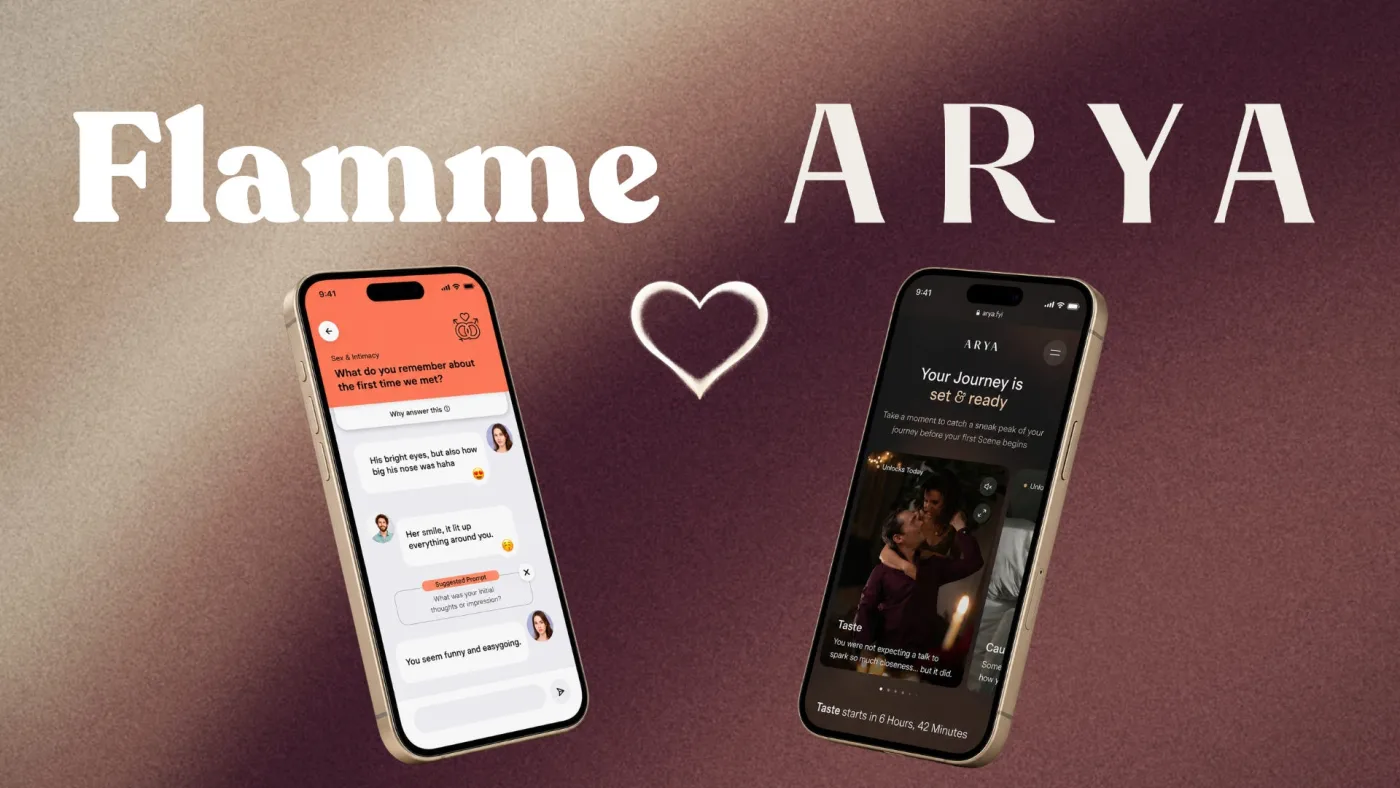
Before apps, An Nayal ran a chain of gyms in China and competed as a bodybuilder. His couples app Flamme (originally Sparks) launched at TechCrunch Disrupt, picked up features in TechCrunch and the LA Times, and sold to Arya in 2026 in a performance-based deal expected to reach the mid seven figures. An now runs Agniverse, a UGC creator agency, and Handler, an AI tool that finds winning social content and helps brands recreate it. He joins the Price Power Podcast to walk through Flamme's full life: a trademark fight, near-zero retention, 50 million TikTok views and an exit.
Ten Tips from the Episode
1. Press is a launch tactic, not a growth channel
Flamme got press over and over: TechCrunch Disrupt, two TechCrunch features in six months, the LA Times. Each one brought a wave of downloads and a boost to what An calls his "founder ego." None of it fixed the fact that users left by day 30.
An's verdict is blunt: "PR isn't sustainable." It helps a lot at the start, when you have no budget and need some signal of interest. It can't carry the company after that.
If press is your main growth source six months in, treat it as a warning, not a win.
2. Talk to users manually, especially now
When Flamme launched, An didn't know email tools could schedule sequences, so he wrote every waitlist email by hand. He'd do it again on purpose.
Repeated conversations teach you things dashboards can't. PostHog and Mixpanel tell you what users did. Talking to them tells you why. With AI agents making it trivial to automate outreach, An thinks direct conversations have "never been more important."
Before you automate outreach, do enough of it by hand that you know what users will say.
3. Find the feature your retained users actually use
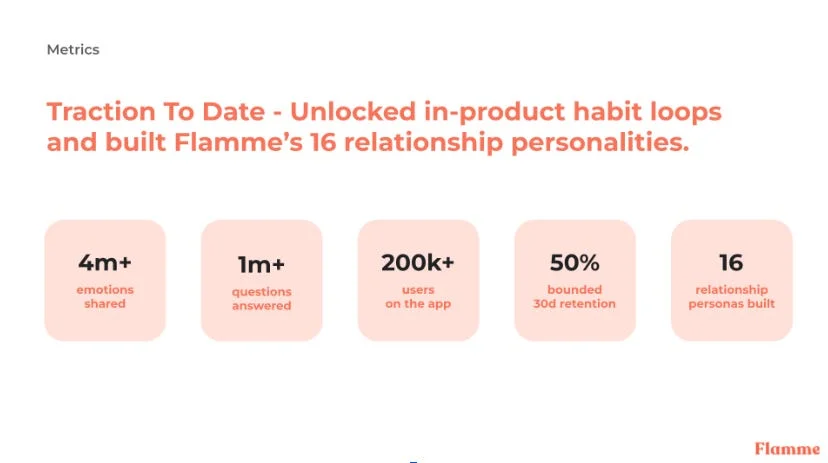
Flamme's headline feature was an AI relationship coach. It was what reporters wrote about. But when An dug into Mixpanel to see why the 4.2% of retained users kept coming back, the answer was something much smaller: a daily question couples answered together.
That question gave busy and long-distance couples a low-effort way to connect. So Flamme stopped trying to perfect the whole app and put everything into that one feature, running A/B tests to make it ten times better.
Your best retention lever may be a feature you consider minor. Look at what retained users do, not at what you're proudest of.
4. In multiplayer products, users bring each other back
The breakthrough came when Flamme realized it didn't need to call users back to the app. Their partners could. If your partner answered the daily question, you wanted to see the answer. If they planned a date, you wanted to accept it.
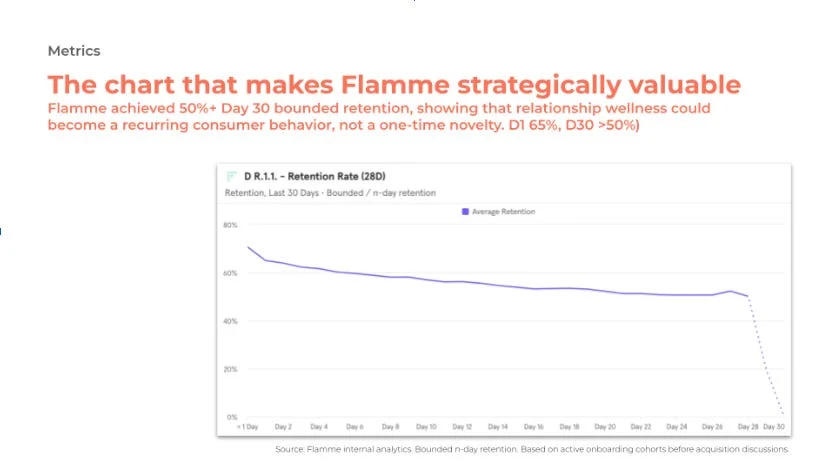
Flamme built a "carrot and stick" around that. In the morning: come make your partner happy and extend your streak. Three hours before midnight, if you still hadn't answered: you're about to make your partner sad and break the streak. An admits it's "a bit overdramatic." It also took day-30 retention from 4.2% to over 50%.
If your product involves more than one person, the other person's activity is a stronger trigger than any notification you write.
5. Don't charge for what used to be free
An launched with no monetization at all. He'd watched The Social Network and figured he'd get every couple in the world on Flamme first and charge later. When money ran low, he learned the first lesson of monetization: "If you give something for free and you ask them to pay later, people are not happy."
Flamme's fix was to leave existing features free. The team watched what users asked for, built those features and launched them behind a paywall. Free users kept their experience. Users who wanted more could pay for it.
When you add a paywall to an existing product, put new value behind it rather than taking away what people already have.
6. Price the unit that actually uses the product
Flamme charged per couple, not per person. One partner paid and both got access.
The data drove that choice. Users who never paired with a partner churned fast. And in most couples, one person pushed for the purchase while the other didn't. Paywalling both partners would have lost both, because a partner-to-partner product dies the moment one side stops using it.
Figure out who decides to buy and who has to keep using the product for it to work. Those aren't always the same person, and your pricing should reflect that.
7. Distribution before pricing experiments
Flamme's early pricing was, in An's words, "mostly a YOLO kind of thing": copy what competitors did, see what people on Twitter were doing, change it after two months. He thinks proper pricing experiments would have boosted revenue.
He still made a deliberate trade. With a small team, the question was what to focus on, and pricing doesn't matter much if nobody is downloading the app. Flamme put its resources into distribution. Jacob agrees with that call at Flamme's stage: with 500 users per variant, most A/B test "winners" are noise, and you're better off making big, obvious changes.
Run pricing tests once you have the traffic to read them. Before that, get the traffic.
8. Organic is one of the last fair testing grounds
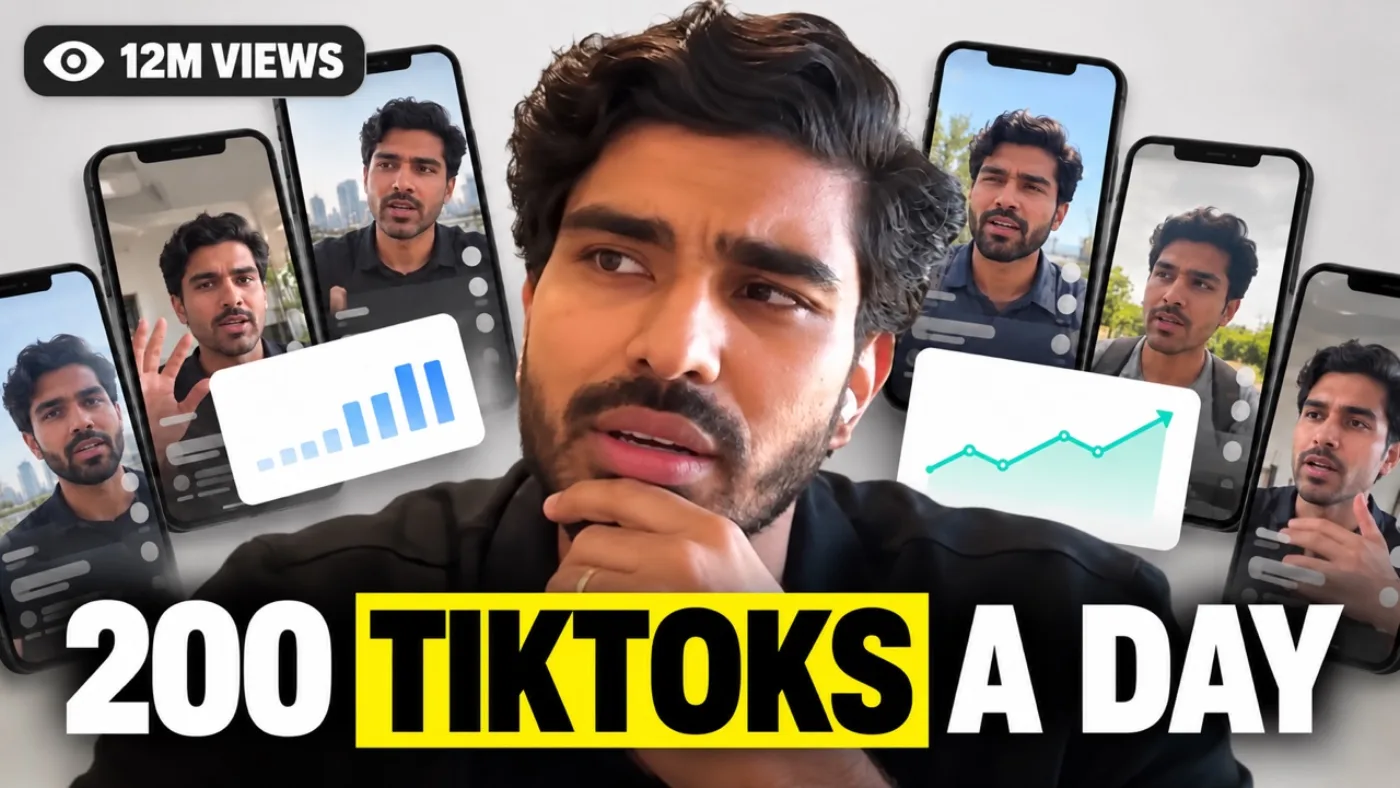
Flamme tried creators in late 2024 after hearing the Cal AI founders talk about it on a podcast. It didn't work. It tried an agency, then an intern. Nothing stuck until summer 2025, when An, nearly out of money, did it himself: a dozen used iPhone 8s, 10 TikTok accounts and 150 to 200 posts a day, sometimes falling asleep on the phones at midnight.
That's how he arrived at his view of organic: it "doesn't discriminate whether you can throw more money at the problem." Paid ads reward whoever can outspend everyone until they crack the channel. Organic rewards the hook, the retention in the body of the video and the targeting.
For an underfunded team, organic is the channel where skill can beat budget. It also requires the founder to go deep personally.
9. Views only count if the content shows the product
Flamme hit 50 million TikTok views and about 200,000 installs. But the first 20 to 30 million views came from memes with a small Flamme logo in the corner, and those converted at roughly 0.05% to 0.1%.
The content that worked did two things. It spoke to a specific pain point couples had, so viewers felt "this is built for me." And it showed the product delivering its aha moment. That content converted at 0.5% to 1%, five to ten times better.
The gap looks small until you multiply it by millions of views. Build every video around the product's value, and show the product on screen.
10. Referral loops have ceilings you can't incentivize past
An expected Flamme to have a K-factor above one: each user invites a partner, then invites another couple. In reality, partner-to-partner invites capped at about 0.5, because you only have one partner and many people won't use an app for their relationship even when invited. Couple-to-couple invites stalled at 0.1 to 0.2.
Cash incentives didn't help. "Invite someone and you both get a month free" brought low-intent users. In An's view, money can speed up word of mouth but never create it. People refer when the product has solved a problem, so the ask belongs at the aha moment. He also points out that couples are private about relationship tools, and that referral loops spread best in school and university networks, where people live in tight, closed groups and try new things.
Before you bet on virality, ask whether your users live in networks where telling friends is normal. If they don't, no reward will fix it.
Where to start
Open your analytics and find what your retained users come back for. Flamme's turnaround started there: the retained users pointed to one small feature, the partner turned out to be the best re-engagement channel, and the content that converted showed the product working. AI has made building easier, which makes distribution the harder wall. An's answer is volume and testing: post a lot, measure what converts, and keep the product on screen.
Resources
Agniverse: https://agniverse.co/
Handler: https://gethandler.ai/
An Nayal's website: https://annayal.com/
An Nayal on X: https://x.com/consumerxai
An Nayal on LinkedIn: https://www.linkedin.com/in/annayal/
Listen to the Full Episode
Youtube
Spotify
Apple Podcasts
Check out past episodes here: PricePowerPodcast.com