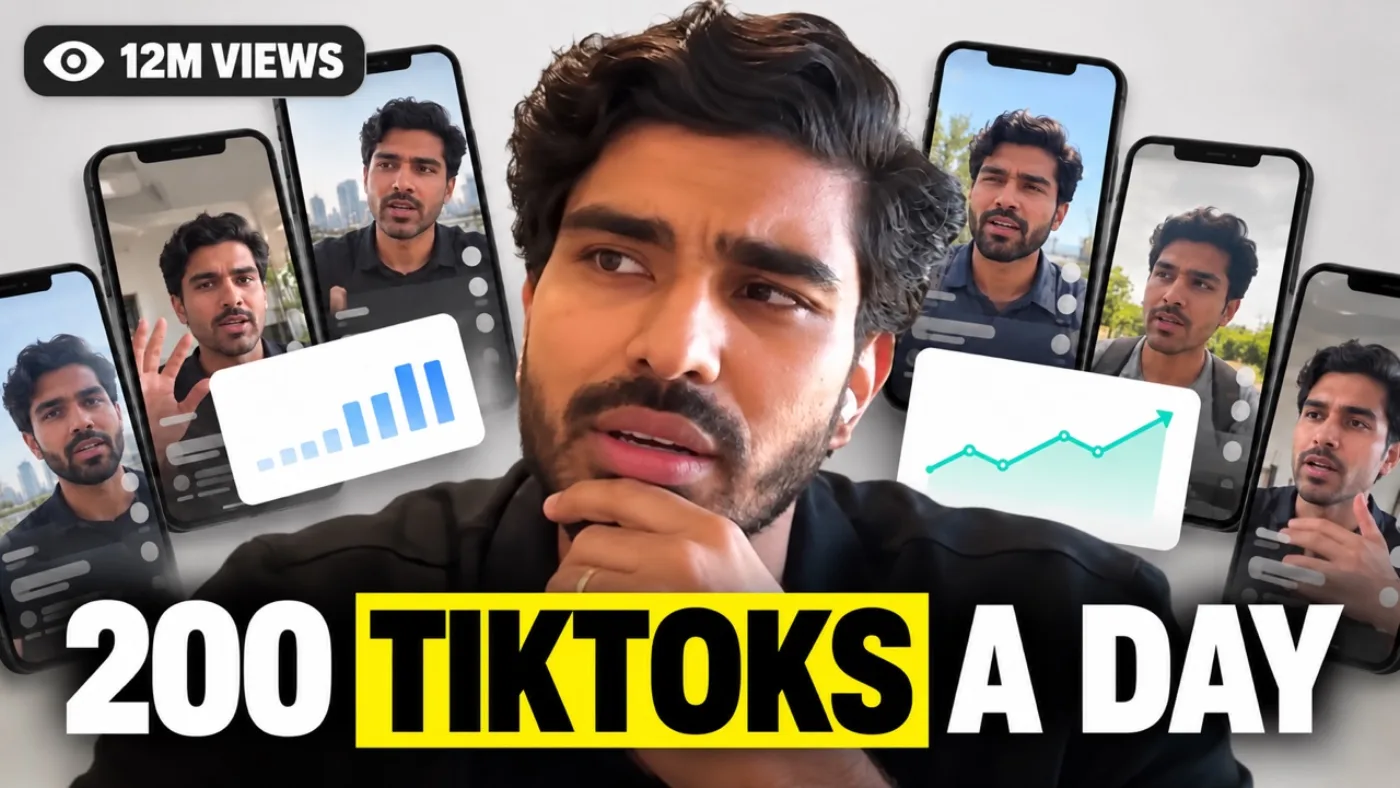
Michal Parizek is Director of Growth at Mojo, a focus and productivity app with millions of users, and wrote up Mojo's pricing experiment results for this blog earlier. He joins the Price Power Podcast to go through how Mojo runs price tests: how they judge a result before the renewals arrive, which markets they price separately, and the order they test things in.
Ten Tips from the Episode
1. Short-term revenue will lie to you
Mojo used to evaluate tests the way most teams do, on new revenue in the first days. That works for a design test. It does not work for price, because price changes behavior you cannot see yet.
When they raised prices, renewal rates for monthly plans came down and yearly showed weaker signals. None of that is visible on day one. A variant can look like a clear winner and still be the wrong thing to ship.
2. Project 13-month revenue instead of waiting for it
What Mojo wanted was a way to see year-two revenue without waiting two years. They settled on a 13-month revenue projection: take the new revenue the variant produces in the first days, add a projection of revenue through month 13, and judge the variant on the sum.
It started as a report template rather than a pipeline, with data pulled by hand from Amplitude and RevenueCat. You do not need a warehouse to do this.
3. Seven-day cancellation rate predicts your renewal rate
Between 20 and 30 percent of cancellations happen in the first seven to ten days, which means a week of data already tells you something.
Measure seven-day cancellation rate separately for each variant, and separately for monthly and yearly plans if you have the volume. If a variant runs 20 percent worse than baseline on that number, model month-one renewal as roughly 20 percent worse and carry your existing curve forward from the new starting point. Mojo checked the predictions at six, nine and twelve months and the direction held.
4. No renewal history is not an excuse
New apps assume they cannot do any of this because they have no renewal data. They still have seven-day cancellation data, from the first week.
Pair that with a published retention benchmark for your vertical and market, somewhere in the 15 to 30 percent range for yearly retention depending on category, and you have enough to make the call. A benchmark-backed projection beats no projection.
5. Apple's local prices are exchange rates
Apple calculates your price in every other country by applying the exchange rate. There is no purchasing power adjustment and no local market input. For a lot of countries that produces a price that does not work.
Do not try to fix every market. Take your top five, and price each one against four inputs: what competitors charge there, your own funnel conversion rate in that country, your internal costs, and local acquisition costs. A market with conversion well below your average is usually a pricing problem.
6. Test price and packaging before you touch the design
Michal's ordering is price first, then packaging, then the trial, then paywall design. That matches what he published from Mojo, where pricing experiments succeeded far more often than design, copy and layout tests.
If your team has already run a lot of pricing tests and the prices look right, design is where the remaining upside is. The ordering is about where to start, not a permanent ranking.
7. The ratio between your plans is a lever
The individual prices matter less than people think. The relationship between them matters more.
Hold your yearly price constant and move the monthly price, and the share of people choosing yearly moves with it. Showing the monthly equivalent of the yearly plan does the same job, because it reframes the yearly price as the cheaper monthly number.
8. Hiding the monthly plan moved yearly share from 60% to 80%
Mojo put the monthly plan behind a separate screen, so the yearly plan looked like the only option, with the rest available behind a link. Yearly share went from roughly 60 to 80 percent, and conversion did not meaningfully drop.
The friction is the point. People with high intent will go find the other plans. Everyone else takes the plan you put in front of them.
9. Test trials by plan, by country, and by length
Mojo treats the free trial as a lever rather than a default. They offered a trial on the yearly plan and not the monthly, which pushed more people to yearly. They found regional differences too: Latin America responded to trials more strongly than other markets, so they kept regional exceptions.
They also tested the community advice that you should withhold trials from high-intent new users, and it did not work for them. Removing the trial for new users produced a clear revenue drop. Then they tested length, found no real conversion difference between three and seven days, and shipped three because it shortens the payback period.
10. Most failed price tests just didn't have enough data
The biggest mistake Michal sees is teams calling a result on a few hundred conversions. That produces false positives, and false positives produce bad decisions that stick around for years.
Two habits help. Go back to the cohort three months later and check whether the prediction held. And look at your traffic mix before you trust a surprising result, because a shift from Meta to TikTok changes who is hitting the paywall and can move the numbers on its own.
Key Takeaway
Spread your first prices wide. Testing 48 against 50 against 52 burns the same traffic as testing 40 against 60 against 80 and tells you almost nothing. Find the region your price lives in, then narrow in a follow-up. And do not be afraid of the test itself: a price test is a new price for a new cohort, existing subscribers are untouched, and in Michal's experience the backlash founders imagine mostly does not arrive.
Resources
Michal's write-up on Mojo's pricing experiments: Pricing Experiments: The Backbone of Mojo's Monetization Success
Michal Parizek on LinkedIn: https://www.linkedin.com/in/michalparizek/
Listen to the Full Episode
Youtube
Spotify
Apple Podcasts
Check out past episodes here: PricePowerPodcast.com